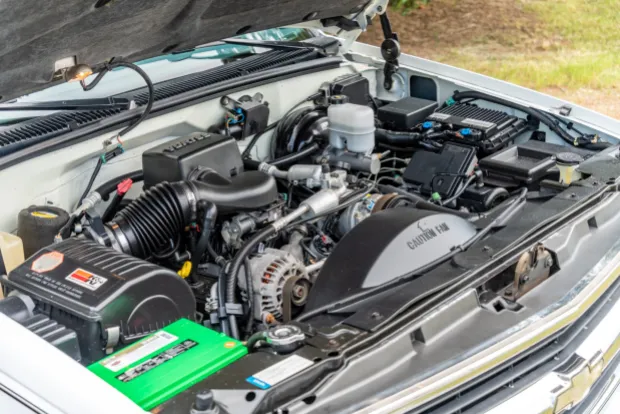
The Vortec 5700 L31 stands as a milestone in Chevrolet truck engine history: the final incarnation of the original small-block Chevy V8 family that began in 1955. While the ubiquitous 350 V8 had powered Chevy trucks, vans, and SUVs for decades, the L31 represents the pinnacle of that long-lived design before GM shifted to the newer LS-based powerplants in the early 2000s.
Origins and Evolution
First appearing in the 1996 model year, the Vortec 5700 (RPO code L31) was GM’s 5.7-liter V8 tailored squarely for truck and SUV duty. It updated the old small-block architecture with improved cylinder heads and fuel injection, and unlike the performance-oriented LT1 used in passenger cars, the L31 retained a truck-friendly focus on low-end torque and durability.
Even though its roots trace back to the 1950s Chevy 350, the L31’s Vortec cylinder heads brought much better airflow than earlier heads. Those heads shared port and chamber designs similar to the LT1, giving respectable breathing without the complexity of reverse-flow cooling found in Gen II small blocks.
Technical Highlights
The L31 is a traditional overhead-valve (OHV) V8 with two valves per cylinder, hydraulic roller lifters, and multi-point fuel injection. It displaces 5.7 liters (350 cid) on a 4.00 in bore and 3.48 in stroke and carries a 9.4:1 compression ratio — a balance of truck torque and everyday reliability.
Typical factory ratings hovered around 255 hp at about 4600 rpm with ≈330 lb-ft of torque at ≈2800 rpm, making it well-suited for hauling and towing in full-size trucks and vans.
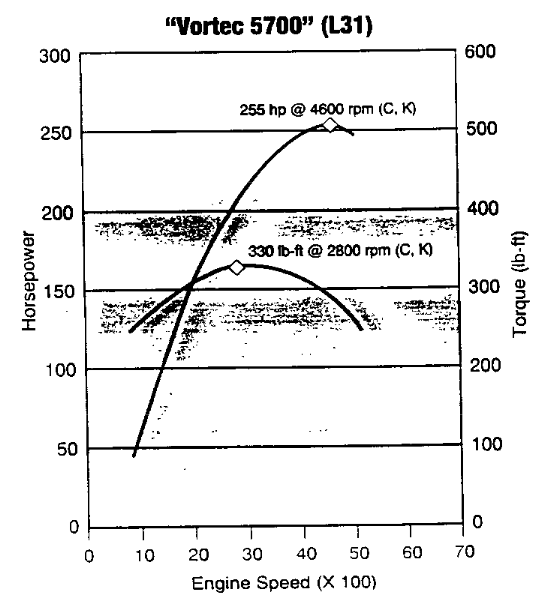
Unlike older small blocks that used six intake manifold bolts per head, the Vortec heads on the L31 use four bolts per head for the intake, meaning swaps or performance builds require the proper Vortec intake manifold to match.
Where You’d Find It
The L31 saw broad use across GM’s truck lineup through the late 1990s into 2002, including:
- Chevrolet/GMC full-size trucks (C/K and early Silverado/Sierra)
- Chevy Suburban and GMC Yukon SUVs
- Chevrolet Express and GMC Savana vans
- Early Cadillac Escalade models
As newer 5.3 L and 6.0 L LS-based engines took over in the early 2000s, the L31 was phased out in favor of lighter, more efficient Gen III V8s.
Strengths and Legacy
The L31’s appeal is as much about heritage as performance. It represents the last chapter of the traditional Chevy small-block, still built with cast-iron block and heads, a simple cam-in-block valvetrain, and robust crank and rod hardware. These engines are known for running well past 200,000–250,000 miles when properly maintained.
Enthusiasts also prize the head design: because they’re compatible with older small-block intakes and manifolds (with the right hardware), Vortec heads are commonly used in performance builds and restorations to boost airflow over stock iron heads.
Common Issues and Maintenance
Like any engine in truck service, the L31 has a few Achilles’ heels to be aware of:
- Intake manifold gasket leaks — a known weak point that can lead to coolant loss and overheating.
- Fuel injector/fuel spider problems — central port injection components may clog or leak with age.
- Distributor gear wear — particularly on early units, which can cause timing and misfire issues.
- Oil consumption on high-mile engines due to worn valve guides or rings.
With routine maintenance — regular oil and coolant changes, intake gasket attention, and careful ignition service — the Vortec 5700 has proven capable of long life and dependable truck performance.
The L31’s Place in GMT400 History
The Vortec 5.7 L L31 marks the end of an era. It was the last engine to carry the DNA of the original 1955 small-block Chevy while still meeting late-1990s emissions and drivability standards. In GMT400 trucks, it remains one of the most respected powerplants GM ever offered — not because it was cutting-edge, but because it worked.
For enthusiasts who value mechanical simplicity, durability, and classic small-block character, the L31 continues to earn its reputation as one of GM’s best truck engines.
Conclusion
The GM Vortec 5.7 L L31 wasn’t a high-revving performance crate engine, but it was exactly what GM needed in its full-size trucks and vans: a simple, durable, torquey small-block built to work. As the swan song of Chevy’s iconic small-block V8 lineage, it occupies a special place in GMT400 history and continues to be sought after for rebuilds, swaps, and classic applications.
Detailed Specifications
| Basic Description | |
| Displacement | 5.7L (350ci) |
| Bore | 4.00in |
| Stroke | 3.48in |
| Compression Ratio | 9.4 : 1 |
| Firing Order | 1-8-4-3-6-5-7-2 |
| SAE Net Horsepower @ RPM | 255 @ 4600 |
| SAE Net Torque @ RPM | 330 @ 2800 |
| Intake System | |
| Induction | Multi-Port Fuel Injection |
| Fuel Injectors | Central sequential “spider” injector |
| Camshaft | |
| Intake Duration | 191 @ .050 |
| Intake Lift | 0.414″ |
| Exhaust Duration | 196 @ .050 |
| Exhaust List | 0.428″ |
| Lobe Seperation | 114 degrees |
| Valvetrain | |
| Туре | Nonadjustable, push rod actuated |
| Lifters | Hydraulic Roller |
| Rocker Arm Ratio | 1.5:1 |
| Cylinder Heads | |
| Туре | Cast Iron Vortec |
| Chamber Volume | 64cc |
| Intake Volume | 165cc |
| Intake Valve Diameter | 1.94in |
| Exhaust Volume | 65cc |
| Exhaust Valve Diameter | 1.50in |
| Head Flow Chart | |
| Lift | CFM (I/E) |
| .100 | 66/52 |
| .200 | 136/104 |
| .300 | 190/136 |
| .400 | 222/154 |
| .500 | 230/158 |
| .600 | — |
